


The remarks of Antony Blinken, the former US Secretary of State, about the necessity of Washington giving concessions to Tehran to reach an agreement go beyond an ordinary political position. These remarks must be assessed within the framework of the strategic consequences of America's confrontation with Iran and Washington's failure to realize the objectives it pursued by relying on its military superiority. The importance of Blinken's words lies in the fact that, from the position of a former American official, he points to a reality that the administration of Donald Trump prefers to remain silent about: to reach an agreement with Iran, America can no longer enter negotiations merely from the position of demanding and imposing its own conditions.
Blinken has explicitly emphasized that any diplomatic agreement with Iran will require the reduction of sanctions and the granting of concessions in connection with the Strait of Hormuz. Also, referring to the continuation of Iran's ability to challenge the security of shipping in this strategic waterway, he has effectively acknowledged that Washington has not been able to eliminate one of the most important components of Tehran's geopolitical power. This position is important because it shows that even in the calculations of part of the American political elite, the possibility of ignoring Iran's strategic capacities does not exist.
The Strait of Hormuz; Where America's Military Superiority Reaches Its Limit
One of the most important realities that the confrontation with Iran revealed to America is the difference between the nature of Iran's power and the conventional military power of countries. For years, Washington relied on the assumption that possessing weapons superiority, advanced technology, and extensive operational capability could, in any military crisis, force the opposing side to accept America's demands. But Iran's geography, its strategic position, and the country's set of defense and geopolitical capacities have confronted this calculation with serious limitations.
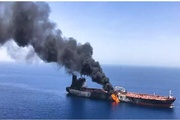
The Strait of Hormuz is a clear example of this reality. This waterway is not merely a passage route for commercial ships; rather, it is considered one of the main chokepoints of the global economy and energy security. Any disruption in the security of this region can create a chain of consequences in global markets; from the increase in insurance and maritime transportation costs to fluctuations in energy prices and the concern of major oil and gas consumers.
The important point is that the importance of this leverage does not depend solely on the complete closure of the Strait of Hormuz. Even the existence of the possibility of disruption in the security of shipping can change the economic and security calculations of great powers. For this reason, when Blinken speaks of the necessity of America giving concessions in connection with the Strait of Hormuz, he is in fact pointing to a limitation that Washington's military power alone is unable to remove.
This is precisely the point at which the difference between military power and strategic power becomes apparent. A country may have superiority in the field of weapons and military technology, but this superiority does not necessarily mean the ability to control all the consequences of a confrontation. Iran, possessing a special geographical position, strategic depth, and asymmetric capacities, has been able to increase the calculative costs of the confrontation for America.
The Failure of Washington's Calculations; From Imposing Will to the Necessity of Giving Concessions
The main issue in America's confrontation with Iran is not merely the extent of damages inflicted or the military achievements of the parties; rather, one must see to what extent Washington has been able to realize its political objectives. In the logic of international relations, military victory turns into strategic success when it can change the political behavior of the opposing side in accordance with the wishes of the victorious power.
If America's goal in entering a widespread confrontation with Iran was to force Tehran to retreat and accept Washington's demands, then the question must now be raised: why do former officials of this country speak of the necessity of reducing sanctions and offering concessions to Iran to reach an agreement?
This change in rhetoric cannot be ignored. America entered the confrontation with the assumption that military pressure could weaken Iran's bargaining position and place Tehran in a situation where it had no choice but to accept Washington's demands. But when the American side, in order to return to the path of diplomacy, is forced to talk about reducing sanctions and giving concessions, it shows that the equation Washington wanted has not proceeded in its desired form.
Of course, this does not mean that America has abandoned all its pressure capacities or no longer possesses other effective tools. Washington still enjoys considerable economic, sanctions, and military power. However, the issue is that possessing multiple tools of pressure does not necessarily mean the ability to convert them into a desirable political result. The experience of confrontation with Iran once again showed that great powers, too, face limitations when confronting countries that possess independent capacities and strategic leverage.
The Domestic Costs of Confrontation; A Factor That Limits Trump's Hand
Alongside the field and geopolitical components, America's domestic political pressures should not be ignored either. Washington's foreign policy is not separate from this country's domestic developments, and any costly confrontation beyond the borders will sooner or later be reflected in the arena of domestic politics.
The results of the midterm congressional elections and the change in the political balance to the detriment of the Republicans can further limit the Trump administration's room for maneuver in continuing confrontational policies. The increase in political pressures, the necessity of accountability regarding the costs of confrontation, and concern about the economic and security consequences of continued tension are all factors that make decision-making in the White House more complex.
For Trump, continuing a costly confrontation without achieving a specific political achievement can become a serious challenge inside America. Especially since American public opinion is sensitive to the costs of foreign policy and the government's economic priorities. Under such circumstances, moving toward an agreement can be a way for Washington to manage the costs of confrontation and rebuild the government's political position.
From this perspective, Blinken's remarks can be seen as a sign of the formation of a serious debate in American political circles about the necessity of reviewing Washington's approach to Iran; a debate in which the issue is no longer merely how to increase pressure on Tehran, but also how to exit a costly situation and reach an acceptable agreement.
Iran; An Actor That Cannot Be Contained with Conventional Calculations
The reality is that in the course of the confrontation with Iran, America faced a country whose power equations cannot be assessed merely on the basis of conventional military indicators. Iran possesses a determining geopolitical position, defense and deterrence capacities, strategic depth, and a set of tools influencing regional security and the global economy.
These features have caused any decision to intensify the confrontation with Tehran to have consequences beyond Washington's initial calculations. In other words, America faces a country that, even under conditions of the opposing side's military superiority, can still influence the costs, scope, and final outcome of the confrontation.
For this reason, the importance of Blinken's remarks must be analyzed within the framework of a larger reality: to reach an agreement with Iran, America is inevitably required to take into account the real capacities of this country in its calculations. One can no longer expect Tehran to relinquish all its strategic leverage merely as a result of military and economic pressure.
Of course, speaking of the necessity of giving concessions to Iran is different from the realization of a fair agreement, and one cannot speak of a definitive change in Washington's policy merely on the basis of the remarks of a former American official. The record of the Trump administration's behavior has also shown that there can be a great distance between diplomatic rhetoric and the practical behavior of this government.
However, one point is clear: the confrontation with Iran has revealed to America the reality that military superiority does not necessarily mean superiority in all arenas of power. Washington may still possess extensive military and economic power, but to convert these capacities into a desirable political result, it cannot ignore Iran's role and its strategic leverage.
Blinken's confession is in fact a reflection of this same change in calculations; a change that shows the path to reaching an agreement with Iran passes not through the unilateral imposition of America's demands, but through the acceptance of the realities of power and readiness for mutual concession.
MNA











Your Comment